Showing posts with label Photography. Show all posts

Friday, October 23, 2020

Questioning Healthcare from The 8th Floor: In the Power of Your Care


Presented by The Shelley & Donald Rubin Foundation at The 8th Floor Gallery in 2016, In the Power of Your Care explored the shortcomings, limitations, and political issues surrounding healthcare. The exhibition addresses the identities of those experiencing different forms of health crises such as cancer, HIV, the ban on blood donations from gay and bisexual men, institutionalized care and more. Artists Jo Spence and Terry Denne’s collaboration, Picture of Health: How Do I Begin?, from 1982-83 portrays Spence wrapped in a white sheer cloth with a single ‘X’ over her left breast, marking her future mastectomy. The color photograph reclaims her body from illness. In Arena, a painting by Frank Moore from 1992, the artist depicts the surreal, other-worldly, and circus-like quality. Set within a circular maze-like construction, skeletons of people and animals, doctors, patients, diagrams, spiritual deities and observers. The image connotes a cynical view of medicine in which the patient is at the mercy of the doctors and on display for others. The exhibition drew attention to the experiences of individuals currently or previously going through medical crises, injustices, or life shifts. The exhibition points out the ways healthcare shapes our society and calls for changes in the policies that block us from humane care for all.
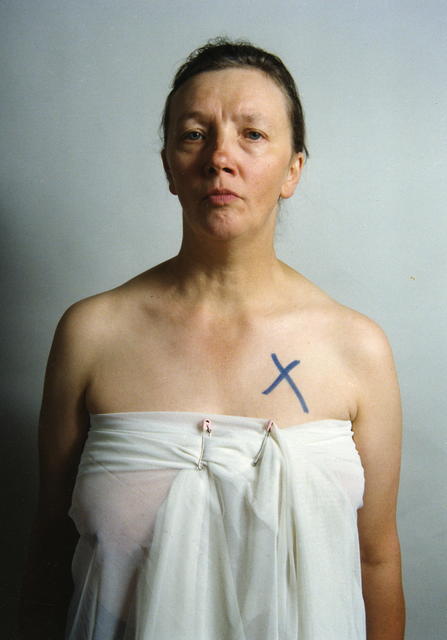
Jo Spence | A Picture of Health: How Do I Begin? (1982-1983) | Artsy

Picture of Health: How Do I Begin? by Jo Spence and Terry Denne. 1982-83. Image courtesy of Artsy.


Arena by Frank Moore. 1992. Oil on canvas. Image courtesy of Artstor. 

Thursday, September 15, 2016

Nan Goldin: The Ballad of Sexual Dependency, The Museum of Modern Art

Nan and Brian in Bed, New York City. 1983. Silver dye bleach print, printed 2006, 15 1/2 × 23 3/16". The Museum of Modern Art, New York.

If you were around during the mid- to late-1980s in New York City, you probably know of Nan Goldin’s The Ballad of Sexually Dependency. If you are 20-to-30-something, interested in that “scene,” and/or live outside of New York, you may own the photobook—or have perhaps flipped through it in a bookstore, possibly seen an image from the series online. If you have no idea what I’m talking about, you must at least be curious about the title alone.


MoMA’s iteration of The Ballad is arranged in three rooms: ephemera from previous exhibitions/screenings in one, framed photos from the series traditionally hung on the gallery walls in another, and the final slideshow room—with soundtrack—depicting the intimate moments that compose The Ballad. Goldin wasn’t shy with her camera; “[it] is the diary I let people read.” This shoot-everything style of photography is common today since everyone has a camera in their pocket or purse, but what makes The Ballad so powerful is its voyeuristic feel and its scattered narrative quality. We all curate our own real-time streams of photos online to tell our stories, but Goldin's story has no filter, no facade.


In the slideshow, visitors sit in the dark and watch the images clip by at a steady pace, fully-engaged because there is something for everyone in The Ballad, whether it be a kiss or evidence of abuse from a lover, motherhood or family, cigarettes or drug-use. Even though we are all voyeurs into a life we didn't live populated with people we didn't know, you walk out of The Ballad happy knowing that you are not alone. Goldin's loose but thoughtfully crafted Ballad has the ability to resonate in everyone.